Menu
Menu
Written by: Lady Dorothy Avila Elli
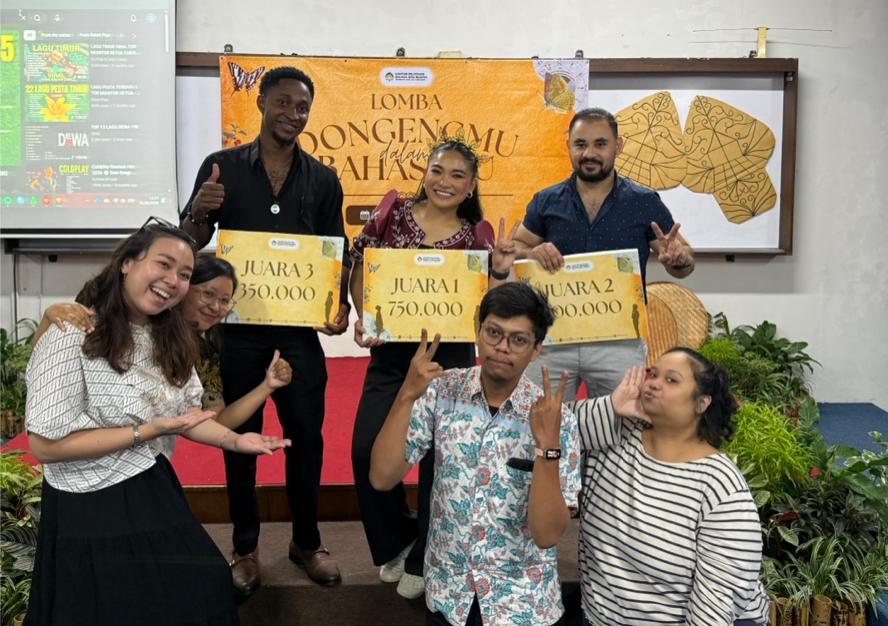
Winning First Place at the BIPA Storytelling Competition
Celebrating first place (Juara Satu) in the BIPA Storytelling Competition alongside fellow international BIPA students learning Bahasa Indonesia. My performance featured the Filipino folktale Ibong Adarna, sharing a piece of Philippine culture through storytelling.
“Hah? Kamu bisa bahasa Indonesia? Padahal kamu bukan orang Indonesia? Kamu sudah belajar berapa bulan?”
“Wait, you can speak Bahasa Indonesia even though you are not Indonesian? How many months have you been learning?”
This is one of the questions I hear most often in Yogyakarta. It usually comes with widened eyes, a laugh, and several follow-up questions about where I am from and why learning Bahasa Indonesia seemed to come so naturally to me.
In some ways, I expected these questions. As a Filipino American with Southeast Asian features, I am often mistaken for Indonesian before I begin speaking. When people learn that I am Filipino, the conversation usually turns to the similarities between Bahasa Indonesia and languages in the Philippines. Many words, sentence patterns, and cultural expressions feel familiar to me, which made the language more approachable from the beginning. That is how I got my nickname, “Indonesian palsu” or “fake Indonesian,” wherever I go.
I came to Yogyakarta in 2025 as a Princeton in Asia Fellow at Atma Jaya University Yogyakarta. My official role was to teach English and share American culture. However, from the beginning, I knew that I did not want to spend the year only standing in front of a classroom. I wanted to understand the people around me and build a life that felt connected to the place where I was living.
The similarities between Filipino and Indonesian culture gave me a sense of confidence from the beginning. Many words, expressions, and social cues already felt familiar, which made it easier to connect with my students, the staff at my office, Kantor Pelatihan Bahasa dan Budaya (Office of Language and Culture), and the people I met in daily life. That familiarity gave me a strong starting point, but mastering Bahasa Indonesia came through experience: listening carefully, making mistakes as often as possible, learning Bahasa gaul (or informal language), and practicing every day with all different types of people.
Over time, my Bahasa Indonesia began to grow beyond the BIPA (Indonesian for Foreign Language Speakers) classroom. After spending hours learning the language as a student myself, I became more comfortable using it in everyday situations and eventually in my own English classes. I started with short phrases, then gradually worked my way up to full sentences and simple explanations.
I especially began using Bahasa Indonesia when I could see that my students were feeling overwhelmed by a class conducted entirely in English. Sometimes, a brief explanation in Bahasa Indonesia was enough to help them understand the context and regain their confidence to follow the lesson again. Each time I tried, I became a little more comfortable. The language I had practiced with teachers, friends, colleagues, drivers, and shopkeepers gradually found its way into my own classroom, especially with the way I taught and connected with my students.
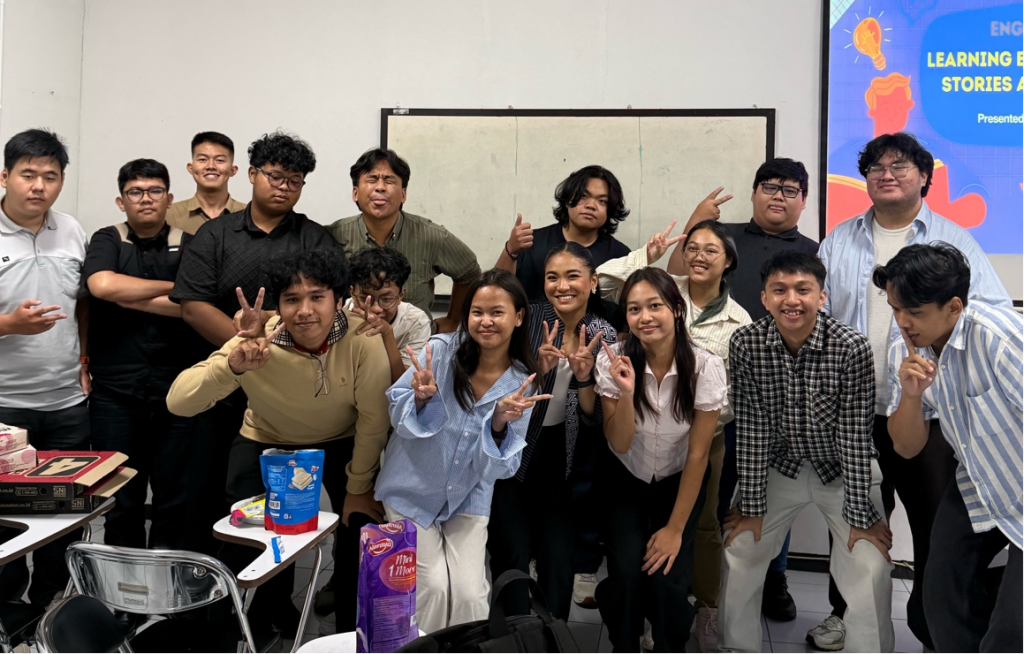
A Final Class Filled with Learning and Laughter
One last English Club meeting together with an incredible group of students. Through interactive activities, conversations, and shared experiences, we built confidence in English while creating lasting memories.
Making English Feel Less Frightening
On the first day of a new class, I could often see the nervousness on students’ faces.
Some students avoided eye contact. Others quietly told their friends, “Aku nggak bisa bahasa Inggris,” or “I cannot speak English.” A few would apologize before answering a question, even when they had not done anything wrong.
I understood that fear. From my own experience, learning Bahasa Indonesia reminded me how vulnerable it feels to speak in a language that is not your own. You may know what you want to say, but the words do not always arrive at the right time. You become aware of every pronunciation mistake and every sentence that sounds different from how you imagined it. Because of this, my goal was to create a classroom where students felt safe enough to try using the English language.
We played games, completed speaking challenges, acted out role-plays, discussed culture, listened to music, moved around the classroom, and worked in groups. I wanted students to experience English as something alive and useful, rather than something they only needed to memorize for an examination.
After one class, a student told me, “At first, I thought the class would be difficult and stressful. But every time I leave, I feel happy because I learned something and had fun.” Another student shared that my classes helped them realize they did not have to wait until their English was perfect before speaking.
Those comments stayed with me because they captured exactly what I hoped the classes could accomplish. Confidence does not always appear as a dramatic transformation. Sometimes, it looks like a student raising their hand for the first time. Sometimes, it is a student speaking for thirty seconds without apologizing. Sometimes, it is laughter filling the room after everyone makes the same mistake together.
My students taught me that learning becomes more meaningful when people are allowed to enjoy it.
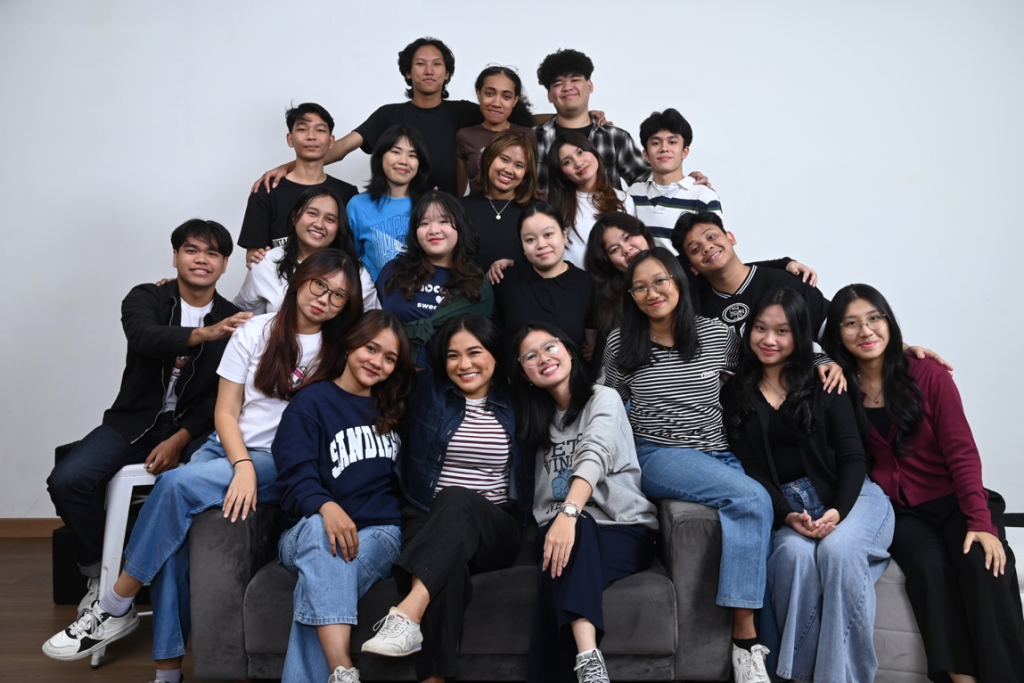
Celebrating the End of Our Journey Together
A group photo with my English class from the Faculty of Industrial Technology (FTI), taken at a local photo booth after our final meeting. Their enthusiasm and willingness to learn made every class engaging and meaningful- this is why I teach!
Teaching Culture Beyond the Classroom
My work at Atma Jaya also gave me opportunities to create cultural programs that brought students, staff, and student staff together.
Throughout the year, I helped organize events such as Halloworld (for Halloween), Friendsgiving (for Thanksgiving), Easter, and U.S. Day (for the Fourth of July) as the staff member in charge. Aside from them being celebrations of American holidays, they were opportunities for cultural exchange and community building. Together with the staff and student staff, we designed interactive programs that incorporated games, food, trivia, music, reflection, and conversation, creating engaging and memorable experiences for everyone involved.
For Easter, I wanted the event to feel welcoming even for participants who did not share my Catholic faith. We focused on themes of hope, renewal, gratitude, and new beginnings. During USA Day, we transformed the space into activity stations where students could learn about culture while participating in challenges and games.
There were moments before these events when the room seemed to be held together by organized chaos. Decorations were still going up, tables needed to be rearranged, and materials were not always where we expected them to be. One person needed an extension cord. The other one else was searching for tape, and questions seemed to come from every direction at once.
Looking back, those moments made the events even more meaningful. Being part of the preparation gave me a glimpse of everything that happens behind the scenes, from the small tasks and quick decisions to the collective effort from the committees-in-charge that participants may never see. Then the doors opened, the participants arrived, and the room filled with conversation. Suddenly, all of those frantic moments made sense.
What stayed with me most was the energy and enthusiasm that the student staff brought to the process which also carried into the events themselves. The effort they put into creating an engaging environment became part of the experience for everyone in the room. There was something special about watching the work behind the scenes transform into genuine enjoyment for the participants.
During the events, the spaces came alive with conversation, laughter, and joy. Students who had once been hesitant to participate in class were suddenly competing in games and cheering one another on. Seeing that transformation reminded me that, sometimes, the most meaningful learning happens when people feel comfortable enough to participate, make mistakes, laugh, and learn together.
Above all this, I truly believe that none of these programs would have been possible without the staff and student staff at Atma Jaya. Throughout my time in college, from my bachelor’s degrees to my master’s degrees, I have been involved in many organizations and worked with many different teams. However, my experience at Atma Jaya, especially with the KPBB, felt different. It was comforting to know that I had a team behind me who could make even the most stressful moments enjoyable. They were there before, during, and after every event, from buying materials at our local shops like Mirota, Toko Merah, and Adele to solving last-minute problems, and sometimes simply keeping me calm when things became overwhelming.
Over time, they became a group I knew I could genuinely rely on. Some of my favorite memories are not even from the programs themselves, but from the moments we shared while preparing for them: the conversations, jokes, rushed problem-solving, and sense that we were all figuring things out together.
Working with them also changed how I think about leadership, especially taking on a leadership role using a language that was quite new to me. I learned that I did not always have to carry everything myself. Sometimes, being a good leader meant trusting the people around me, listening to their ideas, and allowing everyone to contribute what they did best.
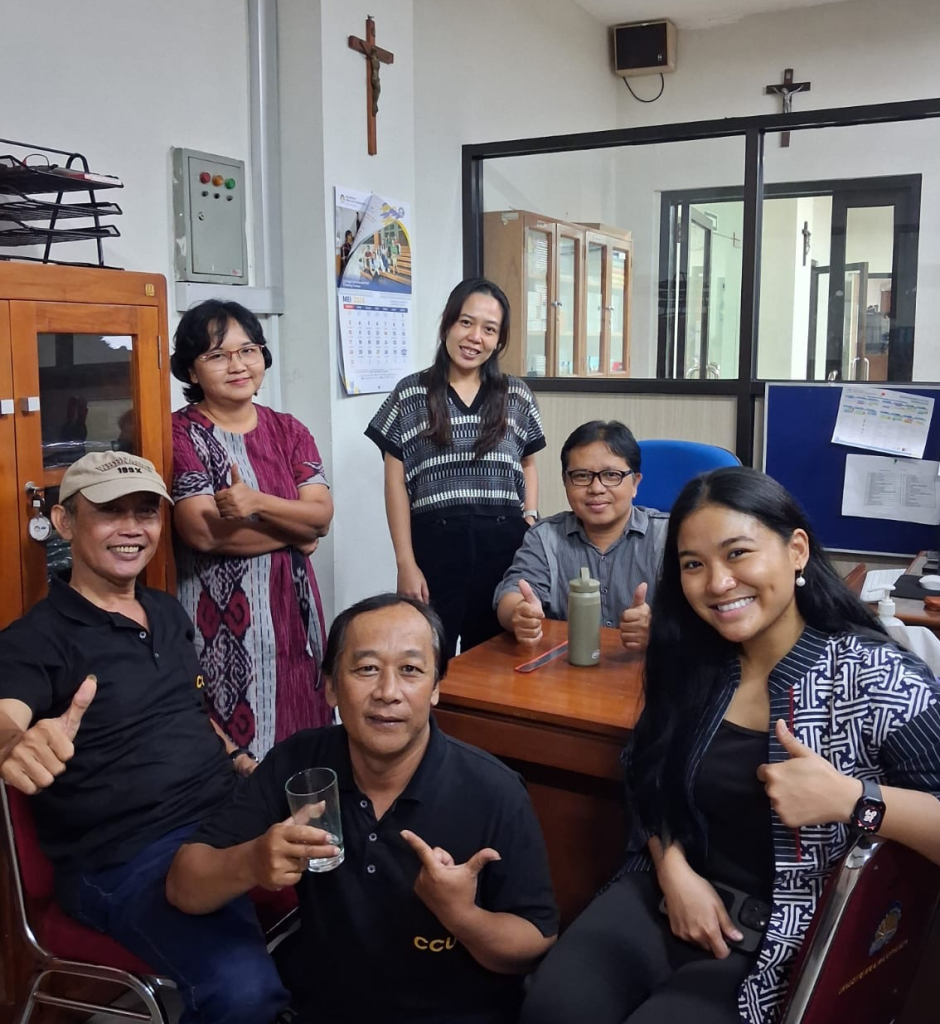
The Team Behind an Unforgettable Year
A special moment with the KPBB staff: Pak Anton, Pak Kusman, Pak Sapto, Mbak Asa, and the Head of KPBB, Bu Vita. Their mentorship and support made Yogyakarta genuinely feel like a second home.
Becoming a Student Again
While I was encouraging my students to speak English without fear, I was also learning Bahasa Indonesia. At first, even simple conversations required preparation. Before speaking, I would quietly arrange the sentence in my mind. I worried about using the wrong expressions, sounding too formal, or accidentally saying something inappropriate in class.
Still, I continued.
I practiced Bahasa Indonesia with people inside and outside the office, whether that included tawar-menawar (bargaining) at local markets, talking to my favorite tailor about how I would like my clothes adjusted, or doing basa-basi (small talk) with all different types of people I met on my trips around Indonesia. Some conversations went smoothly. Others ended with laughter because I had used the wrong word or misunderstood a question.
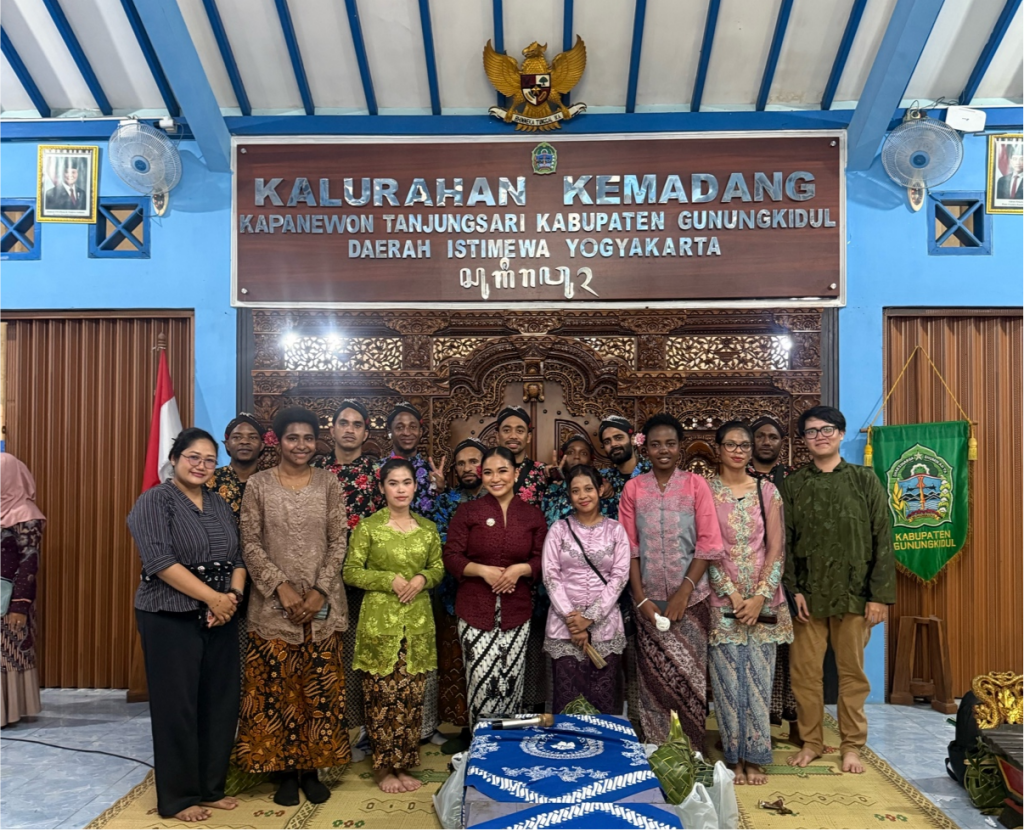
Experiencing Javanese Tradition Through a Traditional Ceremony
Wearing traditional attire alongside BIPA students during a cultural procession and ceremony in Desa Kemadang, Gunung Kidul. As BIPA students, we were honored to be invited to experience and celebrate local Javanese traditions firsthand.
Over time, I became more comfortable. Learning Bahasa Indonesia changed my experience in Yogyakarta. It allowed me to speak with people who might not have felt comfortable using English. It helped me understand jokes, emotions, and small cultural details that are often lost in translation. Most importantly, it showed people that I wanted to meet them where they were.
One of the most unforgettable moments of my fellowship was joining a lomba dongeng, or storytelling competition, in Bahasa Indonesia.
Before stepping onto the stage, I kept thinking, “Why did I agree to do this?”
Bahasa Indonesia was my fourth language, and I had only been seriously studying it during my time in Indonesia. I was nervous about forgetting my lines or saying the wrong thing in front of classmates and friends. While I already played the role of Rara Tarub, the main character in our BIPA (Bahasa Indonesia for Foreign Students) class’ end-of-the-year drama last semester, I was convinced the lomba dongeng would be more difficult because it was five whole minutes of acting, changing my voice to fit the characters, and telling a story from my culture without using my own language.
I performed anyway, constantly telling myself: “Kamu bisa! Pasti bisa!”
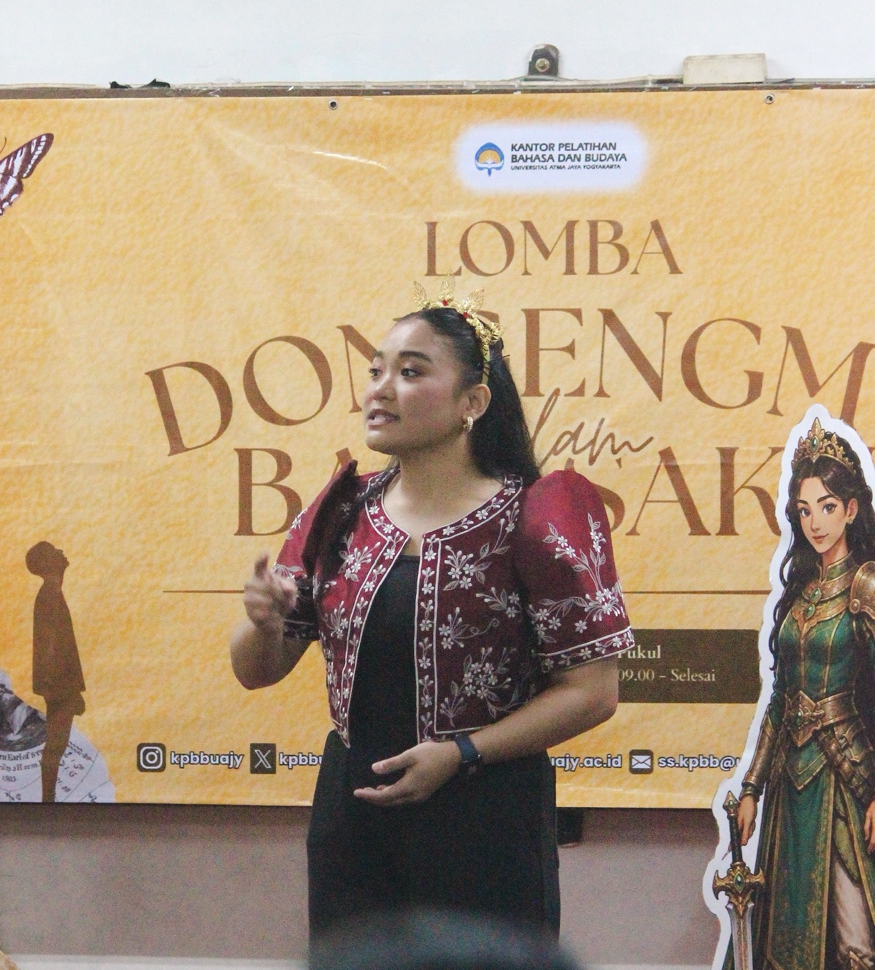
Bringing Philippine Folklore to the Stage
Presenting the story of Ibong Adarna, one of the Philippines’ most beloved legendary tales, during the BIPA Lomba Dongeng or Storytelling Competition. The performance celebrated cultural exchange through language, storytelling, and tradition.
With the help of student staff and friends from the Filipino community, I have been blessed to be able to finish the decorations, do run-throughs guided with directions and advice from my Ates and Kuyas (older sisters and older brothers in Filipino), and polish my performance from start to finish.
When my name was announced as the first-place winner, I felt shocked, proud, and immensely grateful. Winning was exciting, but the experience meant more than receiving Juara 1 (First Place). It represented every correction from a teacher, every conversation with a friend, and every moment when I chose to speak even though I was afraid of making a mistake. Most importantly, it represented the power of community. I would not have been able to achieve Juara 1 without my community supporting me, from making the props to even showing up the day of the lomba.
That competition also changed the way I understood my students. I could no longer tell them, “Do not be afraid to speak,” without remembering how my own hands felt before I walked onto that stage. It taught me to empathize with their fear rather than simply encourage them to overcome it. I began to understand that fear is not always something we need to eliminate; sometimes, it is something we need to accept and face boldly. To me, that is where confidence comes in. Confidence means being courageous enough to keep speaking despite the fear. That is the mindset I now encourage my students to carry throughout their English-language journey.
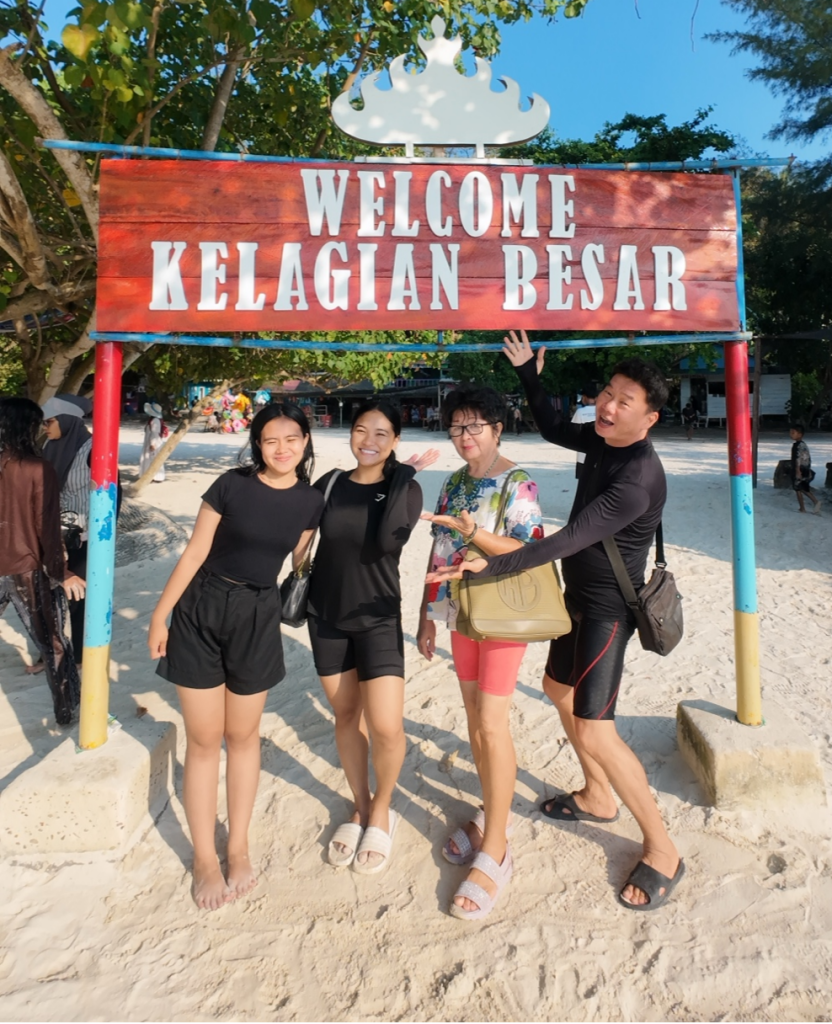
Exploring Lampung with Friends Who Became Family
A memorable holiday in Lampung with Feby, one of the first student staff members I met at KPBB, and her family. From beach hopping to snorkeling, the trip became a wonderful reminder of the friendships formed during my year in Indonesia.
Finding Home Through People
Outside Atma Jaya, Indonesia became meaningful to me through the people who invited me into their lives.
Before I knew it, I had gone from arriving with almost no community to creating communities of my own. As my circle of friends grew, I started organizing a running group, a church group, and our own little jalan-jalan group. One friendship led to another, and soon there was always someone ready to join a run, attend Mass, try a new café, take a weekend trip, or explore somewhere new.
I owe so much of that to the Indonesian ayo, ayo, ayo culture, the spirit of “come on, let’s go!” I loved being surrounded by people who were willing to say yes to an invitation or new experience. That openness made it easy to bring people together. I could suggest an idea, send a message, and somehow a plan would come to life.
That energy shaped some of my favorite memories. Friends welcomed me into their homes in places like Jepara and Lampung. I spent holidays with families, rode the “banana boat” multiple times with them, went snorkeling and failed at freediving multiple times, and shopped for oleh-oleh at various cities in Indonesia. These experiences were fun and memorable, but what stayed with me most was the care that followed them. After a long trip, a late ride home, or even a simple day out, someone would usually check in.
One of the questions I heard most often was, “Sudah sampai?” or “Have you arrived safely?”
That simple message carried so much care. It reminded me that belonging often grows through everyday gestures: someone saving you a seat, inviting you along, introducing you to their family, or checking that you made it home safely. By the end of my time there, I had learned that community can grow very quickly when people are willing to say ayo and mean it.
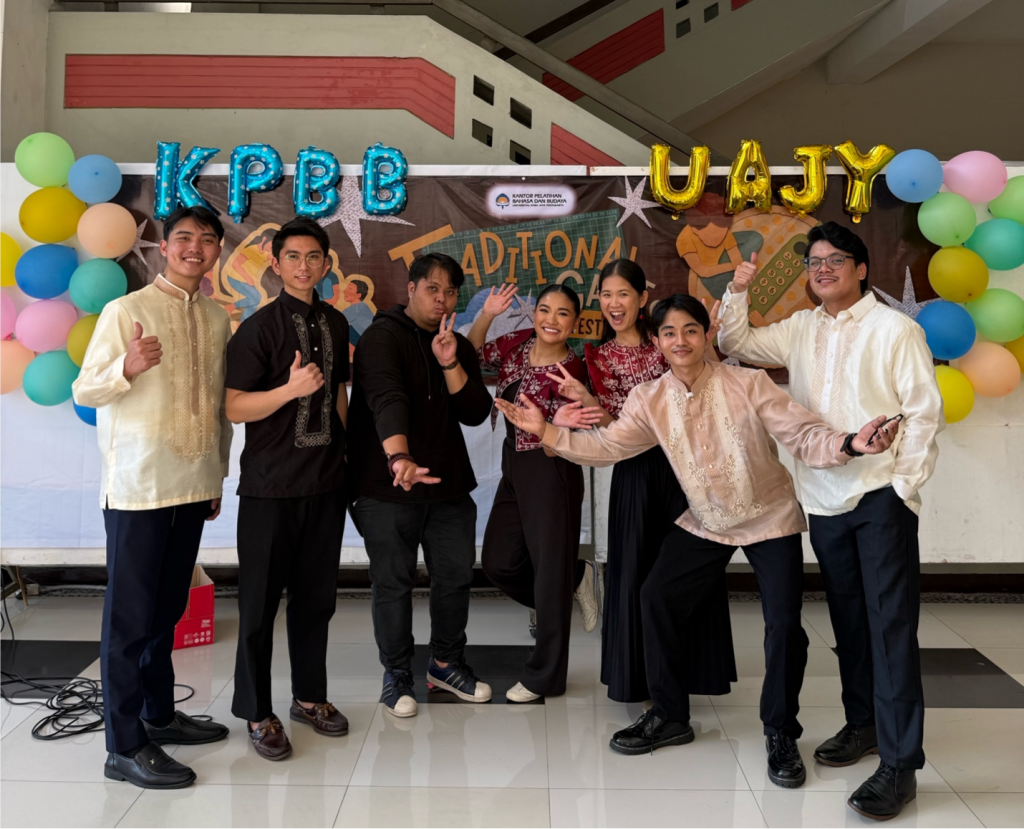
Sharing Filipino Culture Through Tinikling
Together with the Filipino community in Yogyakarta, we represented the Philippines at the Festival Permainan Tradisional or Traditional Games Festival by introducing Tinikling, one of the country’s most iconic traditional dances, to festival participants.
Perhaps that sense of belonging felt so natural to me because so much of it reminded me of home. Being surrounded by friends who treated me like family, sharing meals, traveling together, joking around, and checking in on one another carried a warmth that felt familiar.
As a Filipino American, I found many similarities between Filipino and Indonesian culture. The importance of family, humor, hospitality, and the way people care for one another often reminded me of my own family and community, both in the Philippines and the United States. That familiarity helped me feel at home or sudah betah in Yogyakarta, even while I was still learning how to navigate a culture with its own histories, languages, and traditions.
My identity helped me build bridges, but my curiosity and willingness to lean in and say “ayo” or “aku bisa” to each opportunity helped me cross them.
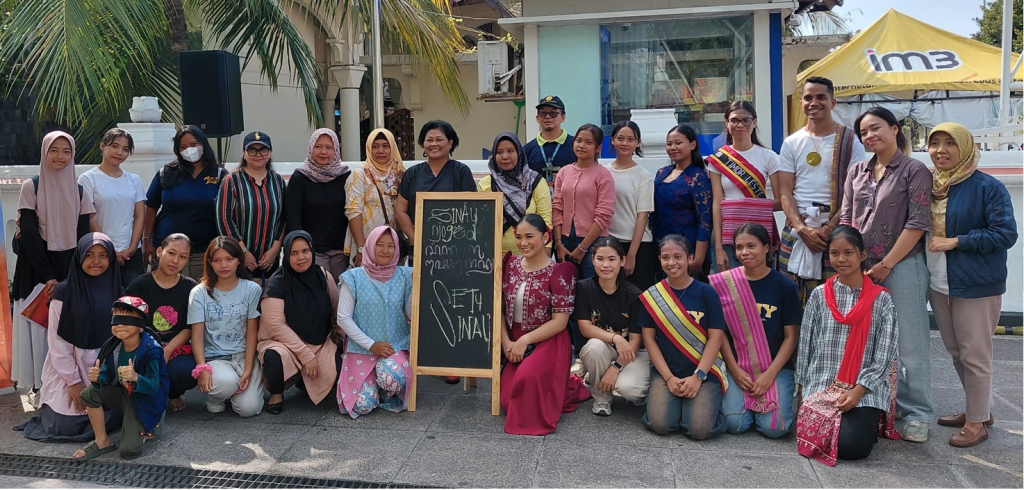
Learning from One Another Through Culture
Joining fellow BIPA students and Setu Sinau for an afternoon of cultural exchange in Malioboro Street, a popular street for locals and tourists in Yogyakarta. We learned traditional Javanese dance and shared our own cultures, where I had the opportunity to teach the Filipino bamboo dance, Tinikling.
What I Will Carry With Me
When I think about my year at Atma Jaya, I remember the major events, the classes, the competition, and the places I visited. However, the moments that mattered most were often much quieter.
I remember a student becoming brave enough to speak.
I remember standing on a stage and telling a story in Bahasa Indonesia.
I remember staff and student staff working together to transform an empty room into a celebration and more deeply, transforming me to become the person I am today.
I remember being welcomed into homes and treated like family.
I arrived in Yogyakarta believing that my responsibility was to teach English and introduce aspects of American culture. I am leaving with a more genuine understanding of what teaching actually requires.
Teaching requires creativity, patience, humor, and genuine empathy. It requires paying attention to the person behind the student. It requires creating spaces where people can make mistakes without feeling ashamed.
Most of all, this year taught me that cultural exchange is not about one person giving knowledge to another. It is about meeting each other with openness and allowing both people to leave changed.
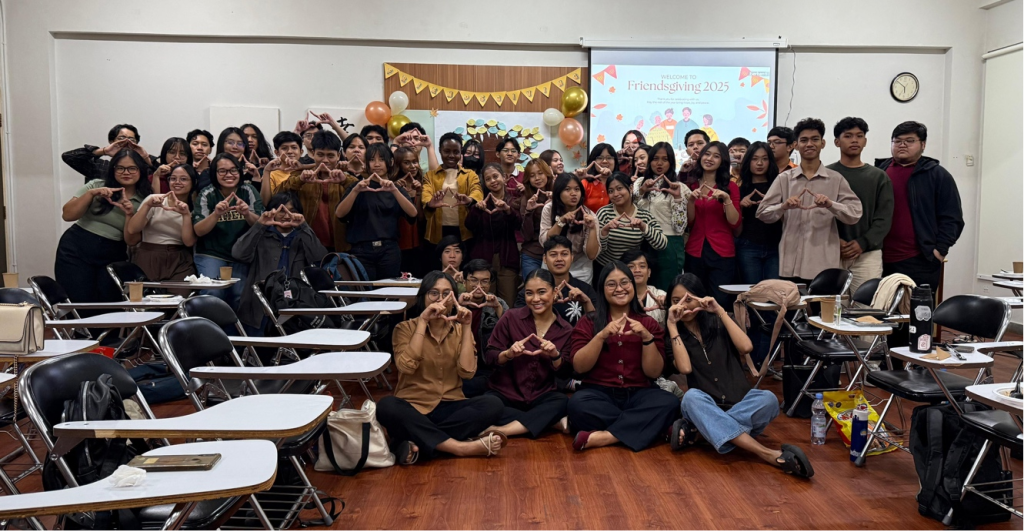
Celebrating Friendship Across Cultures
Together with the student staff and participants of Friendsgiving 2025, we celebrated gratitude, friendship, and cultural exchange. The event introduced the history and traditions of Thanksgiving in the United States while creating a welcoming space for people from different backgrounds to come together.
At the beginning of this fellowship, I already believed it would be a wonderful year. I expected to experience things I would carry with me for a long time. Whenever something felt difficult, unfamiliar, or slightly beyond what I thought I could do, I reminded myself, “Pasti bisa. Aku bisa.” I can do this. I definitely can.
In the end, the year became even more meaningful than I had imagined. It was not simply “bisa.” It was “bisa banget.”
For that, I am forever thankful to the people who kept reminding me that I could do it: my friends and mentors in the United States, my family in the Philippines, and the friends, students, colleagues, and communities in Yogyakarta who continued to encourage me and say, “Aku bisa.”
Indonesia gave me a new language, new friendships, and another place to call home. Atma Jaya gave me the opportunity to become a better teacher, a more thoughtful leader, and a more courageous learner.
“Bisa banget, pasti bisa.” This is what my PiA year in Yogyakarta proved to me.
Penulis: Lady Dorothy Avila Elli